Dalit
- Material
- Found material, Wood, Metal
On my first trip to India I landed at the airport in Chennai, formerly Madras. As soon as you walk out of the airport hall you step into a fairy tale. Swaying palm trees have been waiting for me for centuries. I feel at home immediately. The sight of men and women in exotic dress moves me deeply. The scents and the colours – they never let go of me.
I visited this city with its monumental places such as Mount Thomas – the place where the apostle Thomas brought the gospel of Jesus in New Testament times – and the slums that seem to stretch out in all directions along large and small roads. Outside the city we stopped in a village to soak up the atmosphere. Teenpalli was its name, which translated means ‘Honey village’. How can such a sweet name carry so much misery? The people live here as if the badly built huts had fallen from the sky. Higgledy-piggledy beside an unpaved, potholed track. Now it is dry, but you can imagine that twice a year, during the rainy season, it is one big quagmire.
Now we meet friendly, simple people, whose women wear beautiful, colourful saris. Anyone who is washed and can wear clean clothes looks radiant. But we also see other people who seem to stand at the edge of what is human: deformed, unwashed, in rags, sick, lepers, dazed and completely lost. Everyone goes their own way and nobody gets involved with anyone else. People are indifferent towards their neighbour, who according to the Hindu caste system has a different karma or destiny. Total indifference alongside warm and loving family relationships. It is heartbreaking when we meet the lowest caste of the Hindu way of life: the Dalits. If you are born into this system you have no rights, your lot is worse than that of vermin. You are doomed to do the dirty work in society. Dalits have no right to education, healthcare, chances on the job market, protection from the government. As for access to a bank or insurance, you can forget it entirely. You are stuck in a vicious circle of hopeless despair. Everywhere there is shame about who you are as a Dalit. You are nothing!
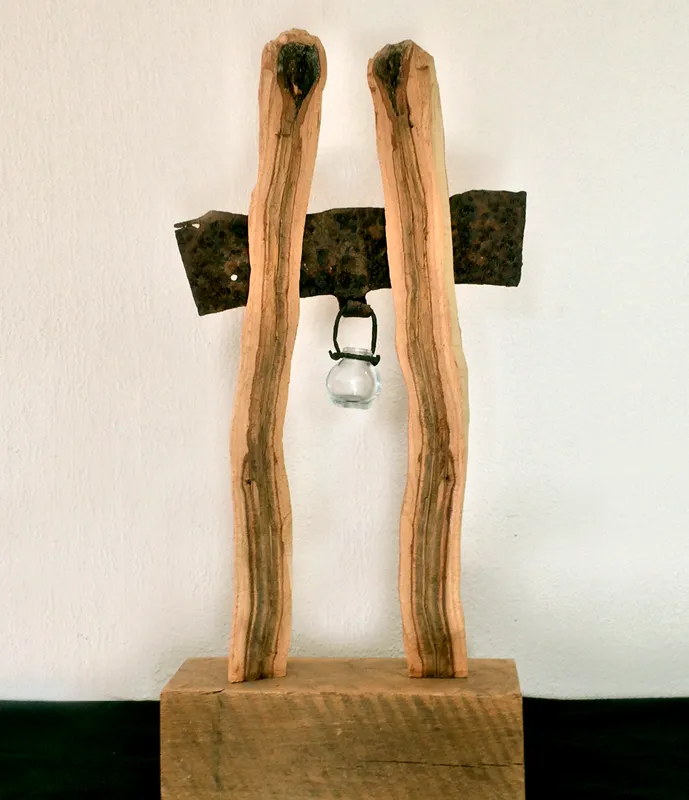
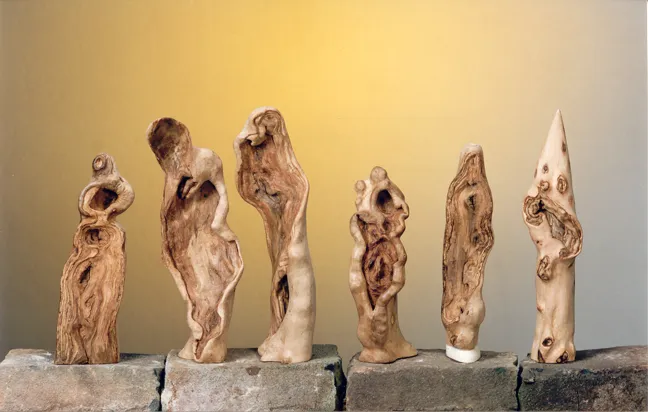
Through these wooden sculptures I want to draw attention to the situation of the Dalits. In the making process I started from worthless materials that our society puts out with the bulky rubbish: pallet wood and scrap metal. I hope you can see the beauty through the transience. Someone wrote in a comment on one of the sculptures: “Very special, this one, the longer I look the more I see. Beautiful…”
God loves people. People with big problems also need big solutions. Are you the one who will bring the solution, or make it possible? Immanuel, God is with us and with the Dalit.